
The 61st edition of the Venice Biennale has opened in an atmosphere unlike any seen in recent art history. What is traditionally regarded as the world’s most prestigious contemporary art exhibition has become the center of international political tension, protest performance, institutional criticism, and debates over the responsibility of artists during times of war.
From demonstrations led by Pussy Riot utside the Russian Pavilion to worker strikes and temporary pavilion closures connected to the Israel-Gaza conflict, the 2026 Biennale has proven that contemporary art can no longer exist in isolation from global political realities.
For artists, curators, collectors, critics, and art institutions across Africa and beyond, the Venice Biennale offers an important lesson: contemporary art is increasingly becoming a space of activism, resistance, and geopolitical discourse.
Why the Venice Biennale Matters to the Global Art World
Often described as the “Olympics of contemporary art,” the Venice Biennale brings together artists and national pavilions from nearly 100 countries. Participation at Venice can elevate artistic careers, influence global art markets, and shape curatorial trends for years.
The 2026 edition, themed In Minor Keys, was developed from the vision of the late curator Koyo Kouoh, one of the most respected African voices in contemporary curatorial practice. Her involvement alone made this year’s Biennale especially significant for African art institutions and emerging artists across the continent.
However, the exhibition has become overshadowed by controversies surrounding the participation of Russia and Israel amid ongoing global conflicts. Critics argue that international art platforms cannot remain neutral while wars and humanitarian crises continue. Supporters of inclusion insist that art spaces should remain open for dialogue rather than censorship.
Pussy Riot and the Return of Protest Performance Art
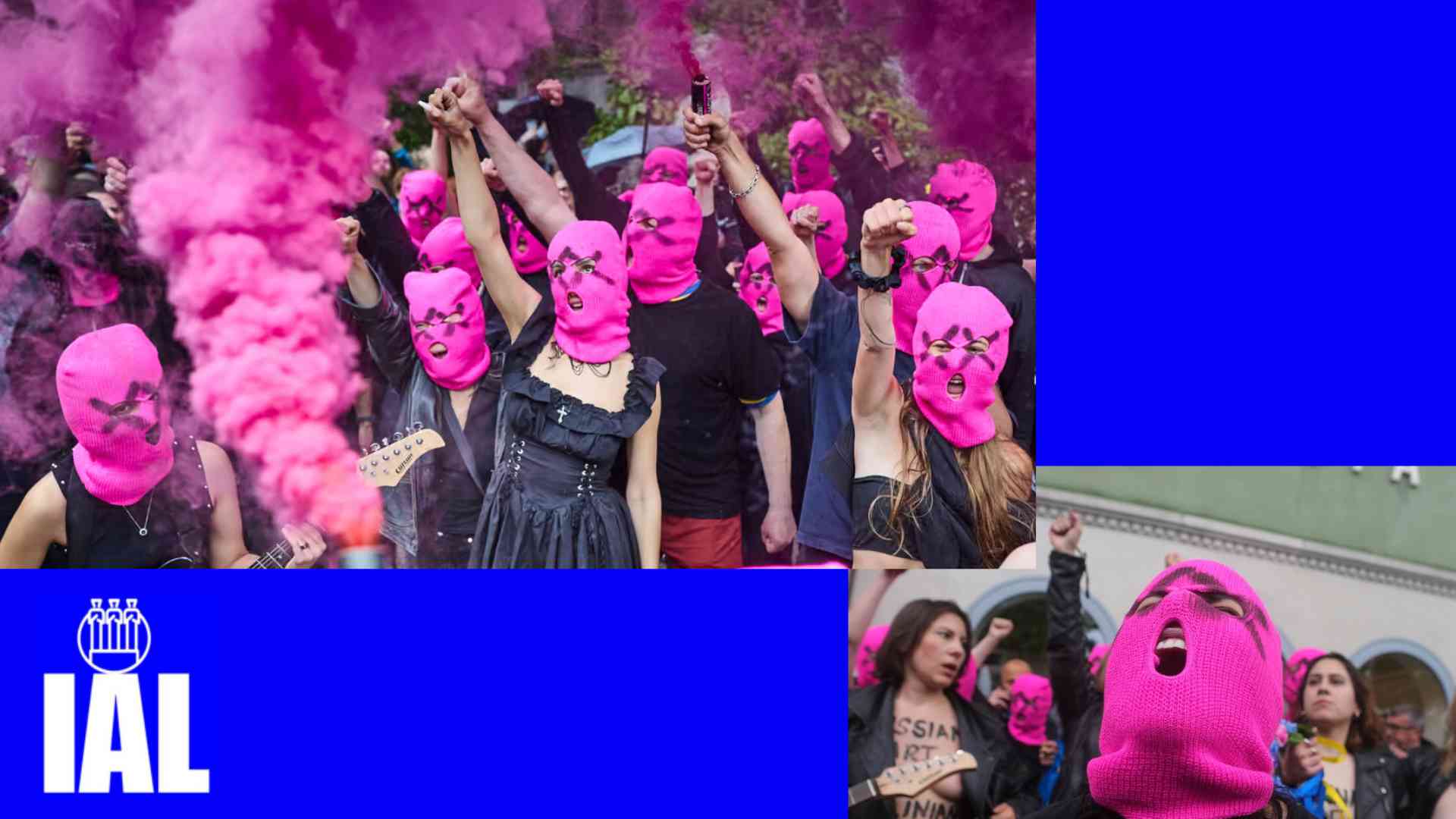
One of the defining moments of the Biennale came when members of Pussy Riot staged demonstrations against Russia’s return to the exhibition.
Wearing their iconic colorful balaclavas and waving Ukrainian flags, protesters marched near the Russian Pavilion chanting anti-war slogans including “No Putin in Venice.” The protest temporarily disrupted activities and drew international media attention.
This moment reflects the continued relevance of protest art in contemporary culture. Rather than using galleries alone, activists transformed the Biennale itself into a performative political stage.
For art students and emerging creatives, this demonstrates how performance art has evolved beyond aesthetics into a tool for activism, resistance, and public intervention. The boundaries between political protest and contemporary artistic expression are becoming increasingly blurred.
The Debate Over Russia and Israel at International Art Exhibitions
The inclusion of Russia and Israel became one of the most divisive issues surrounding the Biennale.
Several artists, cultural workers, and advocacy groups questioned whether nations accused of war crimes or human rights violations should maintain official cultural representation at global exhibitions. Some members of the Biennale jury reportedly resigned amid disagreements surrounding awards eligibility for participating countries.
At the same time, numerous national pavilions temporarily shut down during coordinated strikes protesting Israel’s participation. Countries connected to the demonstrations reportedly included Austria, Belgium, France, Japan, South Korea, and the Netherlands.
The controversy has reignited longstanding questions within the art world:
- Can art truly remain politically neutral?
- Should artists be separated from state politics?
- Do international exhibitions unintentionally legitimize governments?
- Can cultural institutions become instruments of propaganda?
These debates are not new, but the scale and visibility of the 2026 Venice Biennale protests have amplified them dramatically.
Art as Activism in the 21st Century
The events in Venice show how contemporary art institutions are increasingly functioning as political arenas.
Historically, artists have always responded to conflict and oppression. From anti-war movements in the 20th century to postcolonial African art practices, creative expression has often challenged systems of power.
Today’s generation of artists uses installations, digital media, performance, murals, photography, and social intervention projects to engage audiences beyond gallery walls.
This global shift is especially important for African artists and institutions. Across Nigeria and the continent, many emerging creatives are exploring themes including:
- identity and migration
- postcolonial memory
- governance and corruption
- climate change
- youth resistance
- gender and social justice
- cultural preservation
The Venice Biennale controversies show that art institutions are no longer judged solely by artistic quality. They are also evaluated by ethical positioning, inclusivity, representation, and political accountability.
What African Artists and Art Institutions Can Learn
For African art schools, galleries, museums, and independent creatives, the 2026 Biennale offers several critical lessons.
Contemporary Art Is Becoming More Socially Engaged
Collectors and audiences increasingly connect with works that address real social issues. Artists who engage thoughtfully with culture, politics, identity, and public experience often gain stronger global visibility.
Art Institutions Must Prepare for Ethical Debates
Museums and exhibitions are increasingly pressured to take positions on global issues. Curators and cultural organizers now face questions beyond aesthetics alone.
Performance Art Is Experiencing a Powerful Revival
The actions by Pussy Riot demonstrate how performance remains one of the most powerful forms of public artistic intervention.
African Curatorial Voices Are Gaining Global Influence
The curatorial legacy of Koyo Kouoh highlights the growing influence of African perspectives within international art discourse. African curators are increasingly shaping global conversations rather than simply participating in them.
The Future of the Venice Biennale and Global Contemporary Art
The 2026 Venice Biennale may ultimately be remembered less for individual artworks and more for the political tensions surrounding it.
Yet this moment also confirms something important: art still matters deeply in society.
If governments, activists, institutions, and international audiences are willing to protest, debate, boycott, defend, and mobilize around art exhibitions, it means contemporary art still holds enormous cultural power.
The Biennale has become a mirror reflecting the anxieties, divisions, and aspirations of our time.
For artists in Nigeria and across Africa, this serves as both inspiration and challenge. The future of contemporary art may belong not only to those who create visually compelling work, but also to those who understand how art can shape conversations about humanity, justice, identity, and freedom.
Conclusion
The 2026 Venice Biennale demonstrates that contemporary art is no longer isolated from world events. Protest movements, political criticism, institutional resignations, and activist interventions have transformed the exhibition into a global conversation about ethics, representation, and artistic responsibility.
For the international art community, this marks a defining cultural moment.
For African artists and institutions, it represents an opportunity to rethink the role of art in society — not merely as decoration or commerce, but as a powerful force capable of influencing public dialogue and historical memory.

Leave a Reply